
The Complete UWO Off-Campus Housing Playbook: Student Communities, Transit Routes, and Neighbourhoods
Discover the ultimate guide to finding your perfect student home in London. We break down the best neighbourhoods, transit routes, and housing options for Western University students.
With over 40,000 undergraduate and graduate students enrolled across Western University and its affiliated colleges, securing prime Western off-campus housing is a critical priority for the 2026 academic year. Navigating the rental market requires more than just finding a building; it demands a deep understanding of London's distinct residential neighbourhoods, daily transit reliability, and proximity to campus academic hubs.
Whether you are a second-year undergraduate moving out of residence or a graduate student seeking a secure and quiet study environment, this guide breaks down everything you need to know about navigating the London rental landscape.
What is UWO Off-Campus Housing?
UWO off-campus housing refers to the residential apartments, townhouses, purpose-built student accommodations (PBSA), and detached homes leased by students attending Western University in London, Ontario. Because the university guarantees on-campus residence primarily for first-year students, the vast majority of upper-year students transition to these off-campus communities. High-quality UWO off-campus housing is typically defined by its proximity to the university, access to the London Transit Commission (LTC) bus network, and student-focused amenities like inclusive utilities and furnished suites.
How is Western University's Campus Organized for Transit?
Understanding where your classes are located is the first step in choosing a neighbourhood. According to official London Transit Commission routes and schedules, Western's sprawling campus is serviced through several key transit terminals.
To minimize commute times, students should align their housing search with the transit hub closest to their faculty:
Natural Sciences Centre (Nat Sci): The primary terminal for northern and western bus routes (LTC 2, 9, 10, 27, 34, 94, 106). This hub directly serves the Faculty of Science, Engineering (Spencer Engineering Building), and the Schulich School of Medicine & Dentistry.
Alumni Hall & Lambton Gates: The main hub for south and central routes (LTC 2, 10, 31, 33, 34, 102). It is ideal for students in Social Science, Arts & Humanities, Music, and Law.
University Community Centre (UCC): The social heart of campus, housing Student Central, dining hubs, and access to Weldon Library.
Richmond Gates & University Drive: The eastern gateway connecting the campus to Richmond Street, Old North, and downtown London.
What Are the Top Neighbourhoods for UWO Student Housing?
According to The Western Gazette's guide to student neighbourhoods, London’s rental market is segmented into distinct districts. Each offers unique trade-offs regarding transit times, lifestyle, and pricing.
Neighbourhood | Dominant Housing Style | Proximity to Campus | Primary Transit Access |
|---|---|---|---|
Sherwood Forest | PBSA / Apartments | 5–10 min (Transit) | Routes 9, 10, 27, 31 & Private Shuttles |
Masonville | Townhomes / Condos | 8–12 min (Transit) | Routes 10, 13, 25, 34, 92, 93 |
Old North | Detached Houses | 10–20 min (Walking) | Route 6 & Walkable via Richmond Gates |
Richmond Row / Downtown | High-Rise Apartments | 15–20 min (Transit) | Routes 2, 6, 13, 102, 106, 90 Express |
Sarnia Rd / Platts Lane | Low-Rise / Townhouses | 10–15 min (Walk/Bus) | Routes 2, 10, 27, 31 |
Sherwood Forest (Northwest Hub)
Sherwood Forest is highly regarded for upper-year and graduate students seeking modern living away from the intense party scenes, while retaining exceptional campus connectivity. Anchored by the Sherwood Forest Mall, it offers grocery stores like Food Basics and diverse eateries within a short walk. It is directly serviced by LTC Routes 9, 10, 27, and 31.
Masonville (North Commercial Centre)
Centred around CF Masonville Place, this area features upscale apartment towers and multi-bedroom townhouses. While it boasts great retail and dining, students often experience heavy suburban traffic congestion along Fanshawe Park Road during peak rush hours.
Old North
The traditional student neighbourhood consisting of heritage detached homes bordering Western's main gates. While highly walkable, students must navigate aging housing stock, variable heating bills during winter, and intense leasing competition.
Richmond Row & Downtown London
London's urban entertainment district features high-rise apartment towers and easy access to nightlife. The trade-offs include significant weekend noise, higher baseline rental costs, and longer bus commute times during winter storms.
How Does Transit Work for Western Students?
Efficient daily commuting is critical. Wharncliffe and Richmond transit corridors move over 18,000 passenger trips per day during peak academic terms.
All full-time undergraduate and graduate students receive an unlimited 12-month transit pass integrated directly into their WesternONE Student Card, as documented in the LTC's tuition-based pass contract reports.
The Commuter Challenge and Private Shuttles
During peak morning class hours (8:30 AM – 10:30 AM) and heavy winter snowfalls, public transit often experiences "full-bus bypasses" at mid-route stops. As highlighted in The Western Gazette's transit overview, this daily commuter friction is a major stressor.
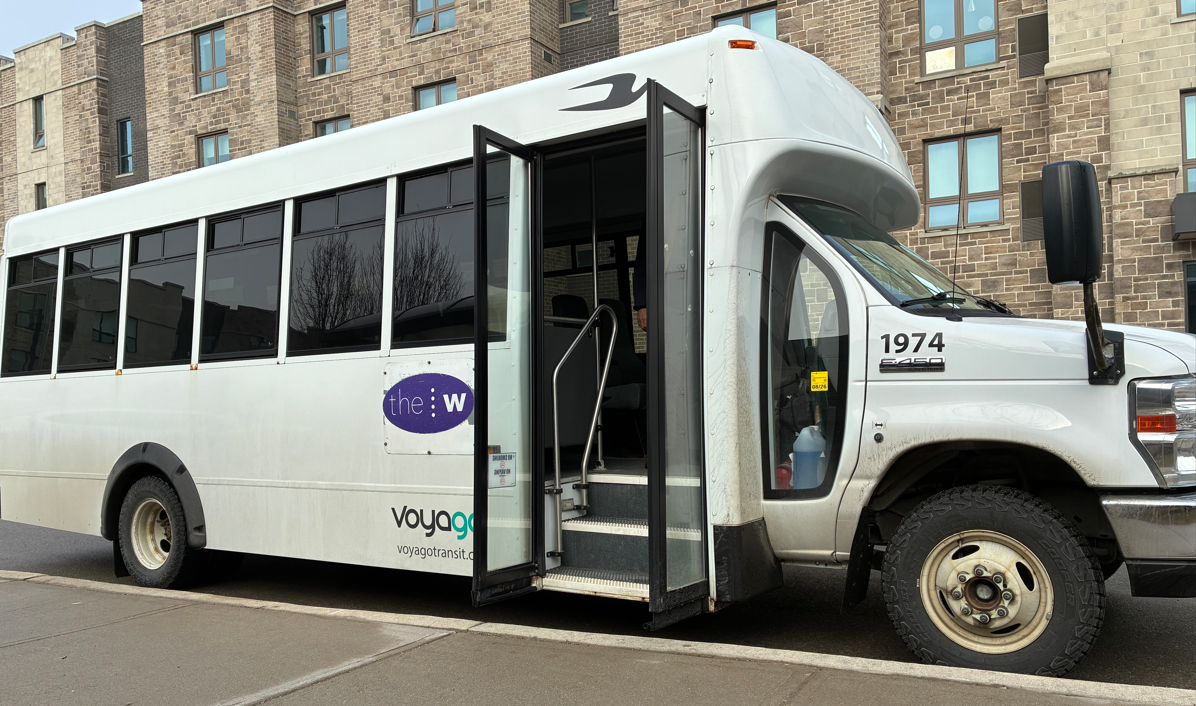
To bypass these delays, purpose-built communities like The W London provide dedicated, private scheduled shuttle vans. Running on continuous loops directly from the residence at 190 Sherwood Forest Square to key campus hubs like Nat Sci and Alumni Hall, these shuttles ensure students arrive reliably for morning lectures without relying on overcrowded municipal buses.
Purpose-Built Student Accommodation vs. Traditional Rentals
The landscape of Western University off-campus housing has evolved significantly in recent years. Today, students are moving away from fragmented lease structures in converted century homes toward Purpose-Built Student Accommodation (PBSA).
According to insights from Student Housing Canada, PBSA properties streamline the student experience by offering an all-inclusive alternative:
Utilities and Wi-Fi: Traditional homes often require roommates to split fluctuating hydro, gas, and internet bills. PBSA communities bundle everything into one predictable monthly fee, saving students from unexpected winter heating spikes.
Furnishings: Moving heavy furniture across London is expensive. Modern purpose-built suites come fully furnished with contemporary bedroom and living room sets.
Secure Infrastructure: Professional on-site management and secure building access provide peace of mind that individual private landlords rarely match.
Amenities: PBSA facilities offer built-in academic and social infrastructure, including private fitness centres, games rooms, and dedicated study lounges for exam seasons.
Positioned just minutes from campus, The W London represents the modern benchmark for these purpose-built rentals, combining the retail convenience of Sherwood Forest with high-end, all-inclusive suite designs.
When Should You Start Looking for Housing? (2026 Timeline)
For the current academic leasing cycle, Western's Off-Campus Housing Services and local data platforms like InsightEstate recommend following a structured timeline:
October to November (Preparation): Form your roommate groups (decide on 2, 3, or 4-person configurations). Establish monthly budget caps and select a preferred neighbourhood.
December to January (Prime Hunting): Off-campus housing fairs open. Purpose-built communities release their lease availability for the upcoming year. This is the time to tour properties and verify transit reliability.
February to March (Lease Signing): Execute Ontario Standard Leases (OSL). Verify your utility inclusions, check guarantor requirements, and review private shuttle schedules if applicable.
May or September (Move-In): Standard 12-month student leases typically commence on May 1, while academic-year schedules intake on September 1.
When evaluating your options for UWO student housing, prioritize transit reliability, predictable all-inclusive pricing, and environments designed to support both your academic focus and daily convenience.