
Western Residence vs Off‑Campus Apartments: 2026 Comparison Guide
Deciding between Western University residence and off-campus housing? Our 2026 guide compares costs, amenities, and privacy to help you find the best value for your student lifestyle in London, Ontario.
Western Residence vs. Off-Campus Housing: What is the Best Choice for 2026?
Choosing between Western University residence and off-campus housing is one of the most significant financial and lifestyle decisions a student will make. As of early 2026, the student housing market in London, Ontario, has shifted significantly. While on-campus residence offers a traditional first-year experience, rising fees and mandatory meal plans have made Purpose-Built Student Housing (PBSH) an increasingly popular alternative for students seeking value, privacy, and independence.
This guide provides a data-driven comparison of Western University on-campus housing versus modern off-campus apartments like The W, helping students and parents navigate the 2026-2027 academic year options.
At a Glance: Residence vs. Off-Campus Comparison Table
The following table breaks down the key differences between living in a Western University residence hall and a purpose-built off-campus community.
Feature | Western Residence | The W (Off-Campus PBSH) |
|---|---|---|
Annual Cost (Approx.) | $16,500 - $20,200 (8 months) | $13,200 - $16,800 (12 months) |
Privacy | Low (Shared rooms/bathrooms) | High (Private bedrooms/ensuites) |
Meal Plan | Mandatory ($6,000+ value) | Optional (Full private kitchens) |
Lease Term | 8 Months (Sept - April) | 12 Months (Full year) |
Amenities | Basic common rooms | Gym, Games Room, Study Lounges |
Transportation | Walking distance | Private Shuttle + LTC Access |
Cost Analysis: Where Do Your Dollars Go?
When analyzing Western University residence fees, it is critical to look at the cost per month of occupancy. While the total sticker price of residence might seem comparable to luxury off-campus housing, the value proposition differs drastically when lease length is considered.
Western Residence Costs
According to 2025-2026 fee structures, a suite-style residence at Western (e.g., Elgin or Essex Hall) costs approximately $18,500 to $20,200 for the academic year. This fee covers only 8 months of housing. Students are required to move out in April, which can be logistically difficult for those with summer internships or research positions in London.
Off-Campus PBSH Costs
In contrast, purpose-built communities like The W typically operate on 12-month leases. While the monthly rate might range from $1,100 to $1,450, the annual cost often comes in lower than residence—between $13,200 and $16,800—while providing housing for the full year. This 12-month advantage effectively lowers the cost-per-day significantly compared to on-campus dorms.
Key Insight: Living in a luxury off-campus suite can be 20-30% cheaper annually than a suite-style Western residence when factoring in the mandatory meal plan costs associated with on-campus living.
Lifestyle and Privacy: Dorm Life vs. Apartment Living
The Privacy Factor
Privacy is the primary differentiator between Western dorms and off-campus apartments.
On-Campus: In traditional residences like Saugeen-Maitland, students often share a bedroom with a roommate and use communal washrooms shared by an entire floor. Even in suite-style residences, privacy is limited.
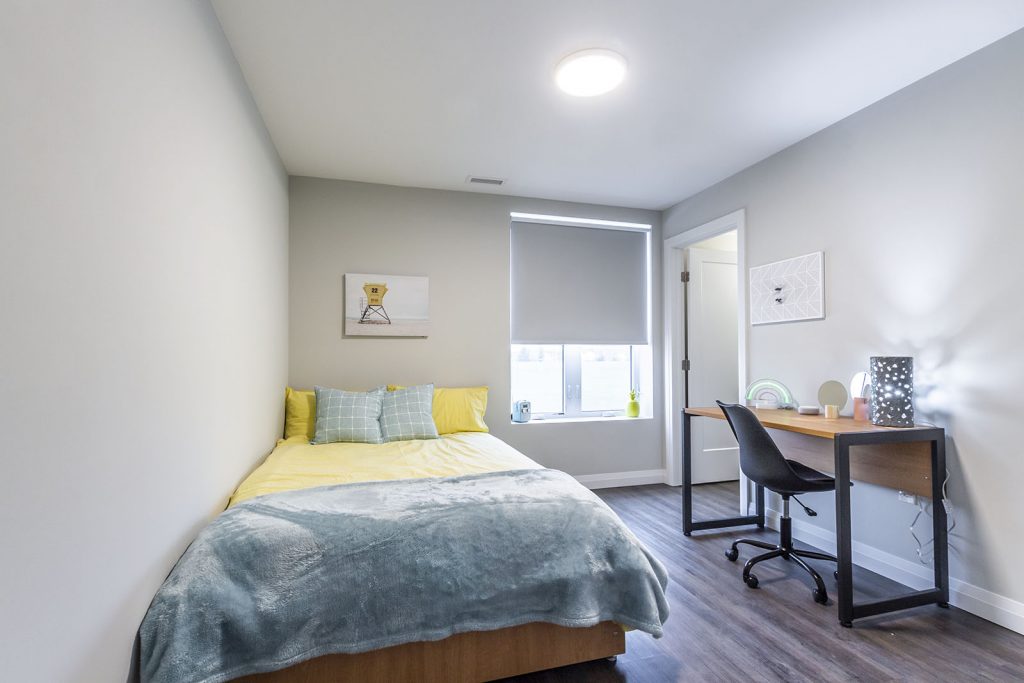
Off-Campus (The W): Modern student housing prioritizes privacy. Units typically feature private bedrooms with en-suite bathrooms, allowing students to decompress and study without distraction. For upper-year students, this separation is often essential for academic success.
Food and Dining
Western residence requires the purchase of a meal plan, which is often cited as a hidden cost for students who may have dietary restrictions or prefer to cook for themselves. The W apartments include full kitchens with appliances (stove, fridge, dishwasher), giving students total control over their diet and grocery budget.
Convenience and Commute: Bridging the Gap
One of the main arguments for choosing Western University on-campus housing is proximity to class. However, the definition of convenient has evolved.
The Shuttle Advantage
While residence students can walk to class, they are often limited to campus amenities. Off-campus communities have bridged this gap with private shuttle services. For example, The W London offers a dedicated shuttle that transports students directly to campus. This often results in a faster commute than walking from peripheral campus parking lots or far-flung residence halls.
Amenities for Success
The W London is designed to support the student lifestyle beyond just a place to sleep. A 2025 survey indicated that 82% of students prioritize reliable Wi-Fi and study spaces. PBSH properties cater to this by providing:
Dedicated quiet study lounges
Group project rooms
On-site fitness centres (gyms)
Games rooms and social lounges
Summary: How to Choose the Right Housing
Choose Western Residence If:
You are a first-year student prioritizing maximum social exposure.
You want the simplicity of a meal plan and do not want to cook.
You want the convenience of living on campus
Choose Off-Campus PBSH (The W) If:
You want better value for your money (12 months of housing for less than the cost of 8 months in residence).
You require a private bedroom and bathroom for study and rest.
You want the independence of a full apartment with the security and amenities of a student community.
You need housing during the summer months for work or summer courses.
Frequently Asked Questions (FAQ)
Is it cheaper to live on residence or off-campus at Western?
Generally, living off-campus in a shared house or purpose-built student apartment is cheaper than living in residence. Western residence fees range from $16,500 to over $20,000 for just 8 months, whereas all-inclusive off-campus options often cost between $13,000 and $17,000 for a full 12 months.
Do off-campus student apartments come furnished?
Most purpose-built student housing, such as The W, comes fully furnished with beds, desks, sofas, and dining furniture. Traditional student rentals (converted houses) usually do not come furnished, requiring students to buy and transport their own furniture.
When should I apply for Western off-campus housing?
Due to London's low vacancy rate (below 1.5% in 2025), it is recommended to start looking for off-campus housing in January or February for the upcoming September school year. Waiting until summer can severely limit your options.
Is off-campus housing secure?
Purpose-built student housing offers high levels of security, often featuring controlled key-fob access, video surveillance, and on-site management staff. This offers a more secure environment compared to traditional standalone rental houses in the neighbourhood.